Why Occupational Therapists in Houston with Little Eaters & Talkers Can Help Babies, Toddlers, and Children
When parents think about therapy for their child, they often picture speech therapy or physical therapy—but occupational therapy (OT) plays an equally important role in helping children thrive. At Little Eaters & Talkers in Houston, our pediatric occupational therapists work side by side with speech-language pathologists to support babies, toddlers, and children in the areas that matter most: feeding, play, sensory development, and daily routines.

How We Help Babies
Bottle and Breastfeeding Transitions: Supporting families when feeding feels stressful.
Early Sensory Processing: Helping little ones adjust to new sights, sounds, and touches.
Motor Development: Building strength and coordination for rolling, crawling, and play.
How We Help Toddlers
Picky Eating & Mealtime Struggles: Expanding food variety in a positive, playful way.
Sensory Play: Helping toddlers who are sensitive to noises, textures, or movement.
Self-Care Skills: Encouraging independence with feeding themselves, brushing teeth, or beginning toilet training.
How We Help Children
School Readiness: Supporting handwriting, scissor use, and classroom participation.
Emotional Regulation: Teaching strategies for calming big feelings and improving focus.
Play & Social Development: Building motor and sensory skills that support friendships and active play.
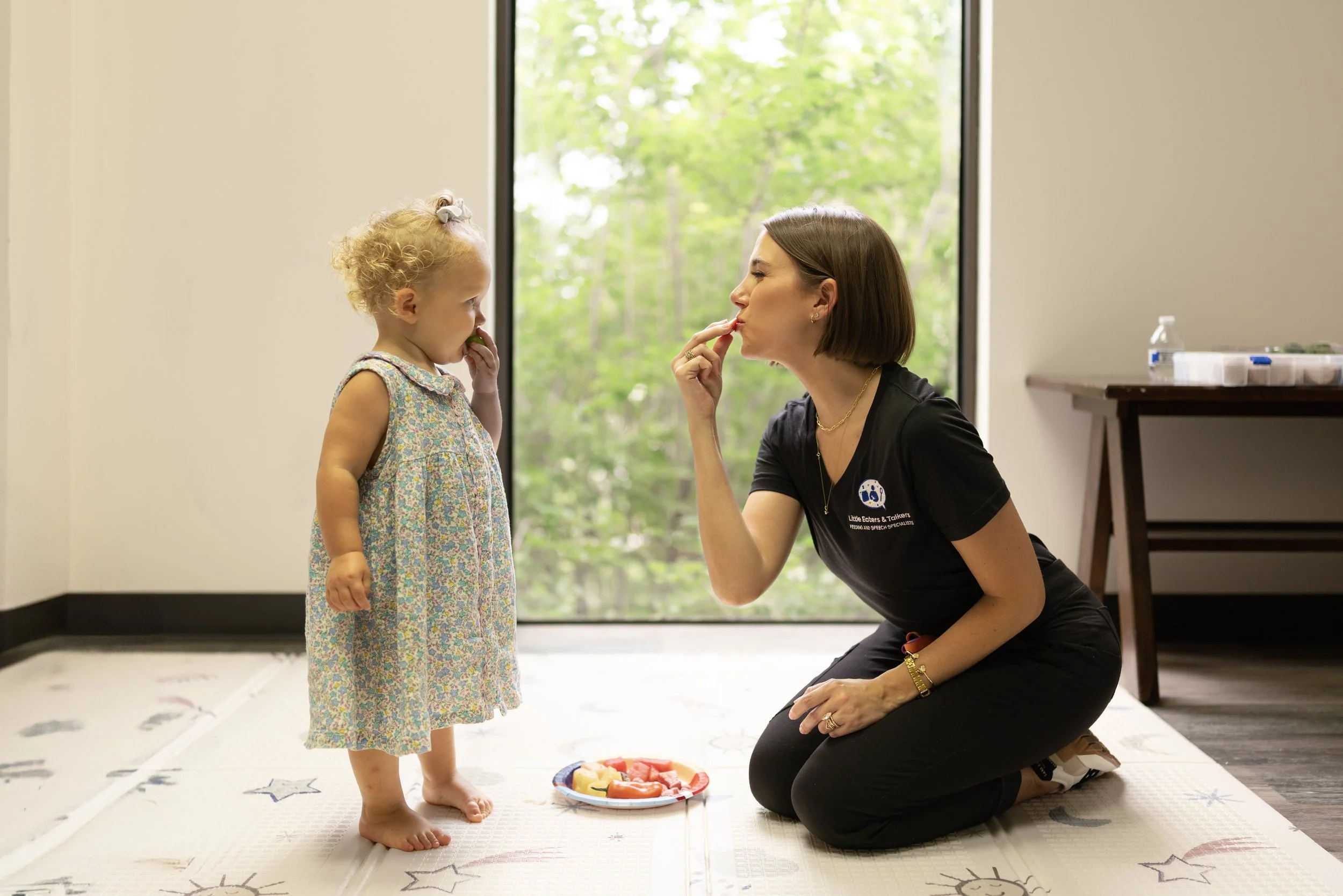
Why Choose Little Eaters & Talkers in Houston?
What makes our practice unique is our collaborative approach. Our occupational therapists and speech-language pathologists work as a team, so your child benefits from whole-child care. Whether your child is struggling with feeding, sensory sensitivities, or communication, we design therapy that meets their needs at home, in school, and in the community.
Take the Next Step
If you’re in Houston and wondering if your child could benefit from occupational therapy, you’re not alone. Many parents come to us unsure of whether their child’s challenges are “typical” or signs they need support. That’s where we come in—with compassion, expertise, and a plan that makes everyday life easier.
